Rare 2000 Sacagawea Dollar : Back in the spring of 2000, a simple roll of shiny new dollar coins sparked one of the wildest tales in modern American numismatics.
Frank Wallis, an everyday collector from Mountain Home, Arkansas, cracked open that roll and spotted something that didn’t belong—a coin blending two worlds in the most unexpected way.
The Dawn of a Golden Era
The Sacagawea dollar burst onto the scene that year, designed to revive the dollar coin after the Susan B. Anthony flop.
Sculptor Glenna Goodacre captured Sacagawea, the Shoshone guide from the Lewis and Clark expedition, cradling her baby on the front, while Thomas D. Rogers etched a soaring eagle on the back.
Its golden hue came from a manganese-brass cladding over pure copper, setting it apart from quarters with its plain edge and larger size.
The U.S. Mint pumped out over 767 million from Philadelphia alone, hoping it’d catch on in vending machines and laundromats. Little did they know, chaos lurked in the coining presses.
A Mint Mix-Up No One Saw Coming
Deep in the Philadelphia Mint, dies got swapped in a freak accident. Someone grabbed a Statehood Quarter obverse—featuring George Washington and maybe Virginia’s outline—instead of the Sacagawea front for the dollar reverse.
The result? A “mule error,” a mismatched pair struck on a dollar-sized planchet. Mint workers caught the blunder mid-run, torching bins of the hybrids to hide the mistake.
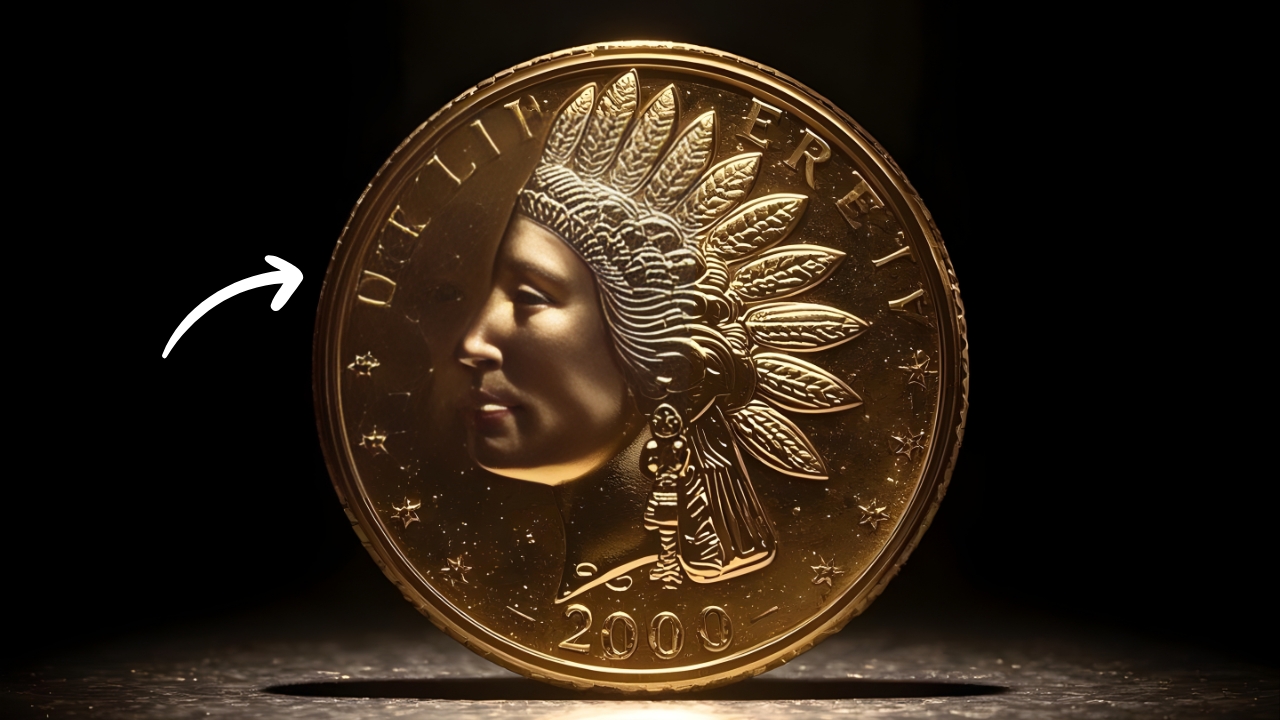
But a handful slipped through regular channels into bank rolls and pocket change. Wallis’s find in May 2000 was the wake-up call, hitting the numismatic world like lightning.
Chasing Shadows in Cereal Boxes
That same year, the Mint teamed with General Mills for a promo stunt, hiding 5,500 special Sacagawea dollars in Cheerios boxes nationwide.
These “Cheerios dollars” sported a prototype eagle reverse with bold, diagonal tail feathers—distinct from the standard parallel lines.
Kids and collectors tore through breakfast bowls, unearthing these early-release gems. Only dozens have surfaced since, adding fuel to the frenzy around 2000 varieties. Meanwhile, whispers of the mule spread, with more turning up in circulation.
The Hunter Becomes the Hunted
Wallis sent his oddity to experts, who confirmed the impossible: a quarter head on a dollar body. Soon, others emerged—a second in Illinois, a third on the East Coast. By summer, the Mint admitted three die pairs existed, each subtly different.
Specimens trickled out via employee slips or overlooked bins, fueling detective stories among hobbyists. One “Treasury specimen” even got Treasury officials’ eyes in 2001. Numismatists pored over rolls, dreaming of their own jackpot amid billions of normals.
Echoes of Adventure in Metal
Sacagawea herself embodied rarity— a young mother guiding explorers across uncharted wilds, her image now immortalized in error form. These mules captured that spirit: fleeting, bold, defying the machine.
Videos online recreate the thrill, narrators urging viewers to flip couch cushions for overlooked rolls. The 2000-P mule remains the king, with under two dozen certified, each a snapshot of human slip-up in precision minting.
Rare 2000 Sacagawea Dollar
Over two decades later, the hunt endures. Collectors swap tales of near-misses, while forums buzz with photos of suspects.
The mule’s allure lies not just in scarcity, but in the everyday miracle—a coin from the Mint’s hidden glitch entering real life.
Also Read this – BMW 7 Series 2026 luxury design, sporty edges, high tech features and ultimate power
This chapter of coin history reminds us: fortune favors the curious, turning loose change into legend one mismatched strike at a time.